Selected from more than 280 proposals, the winning design offers a permanent public restroom at the historic home of Bauhaus founder Walter Gropius.
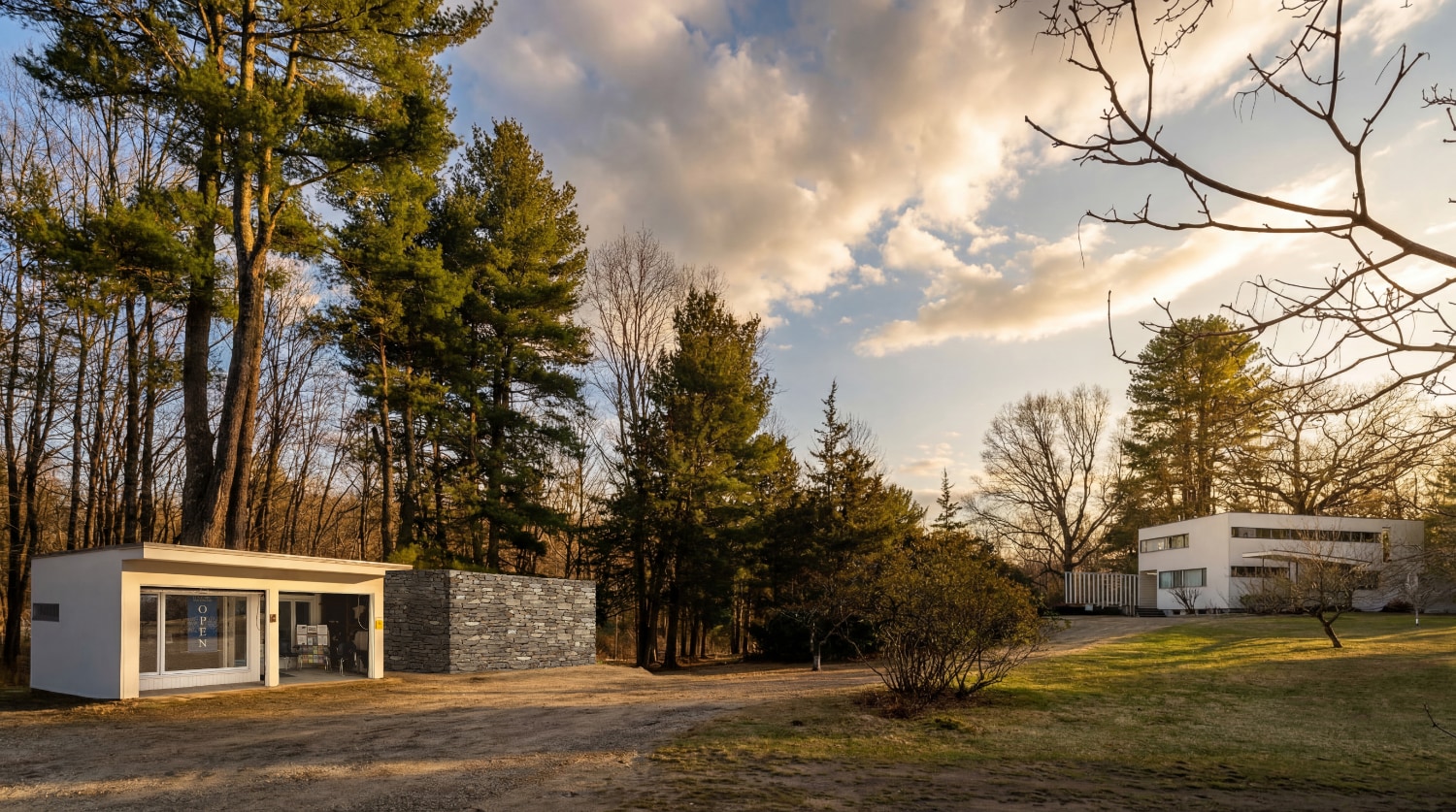
Historic New England – the oldest, largest, and most comprehensive independent preservation organization in the US – has announced the winner and four finalists of its international design competition to reimagine the visitor experience of Gropius House. The Lincoln, Massachusetts home of modernist pioneer Walter Gropius is one of 38 exceptional museums and landscapes stewarded by Historic New England.
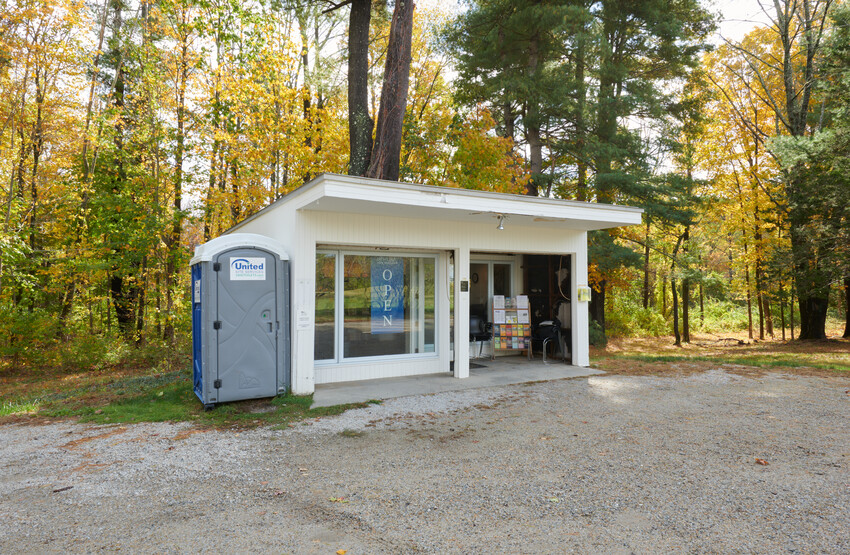
Launched earlier this year in conjunction with the 100th anniversary of the Bauhaus Dessau, the competition was designed to tackle a persistent practical need at the Gropius House: the lack of a thoughtfully designed, accessible, public restroom. Since the site became part of Historic New England’s holdings more than forty-five years ago, no solution has successfully resolved this functional requirement. This competition initiated a deeper, multi-disciplinary exploration into how such a facility could be creatively and sensitively integrated into the site and its existing architecture. This structure will also play a critical role in creating a sense of arrival for visitors to the site and framing the viewshed to the main house.
The initiative reflects Historic New England’s ongoing commitment to stewarding significant historic places while ensuring they remain accessible, relevant, and responsive to the needs of contemporary visitors.
Courtesy of Historic New England
The winning proposal, “One Bathroom After Another” by architectural designer Isabel Strauss, was selected from more than 280 submissions received from 40 countries across six continents. Nearly a quarter of entries came from outside Europe and North America – a testament to the global resonance of Bauhaus ideas and the enduring influence of Walter Gropius on contemporary design. Strauss’s proposal introduces a twin volume that echoes the form of the existing garage, while differentiating it through material and orientation, to create a clear, yet contextually sensitive, addition to the site.
“I entered this competition because of my pure love for the Gropius House, and I am so thrilled and honored that my entry conveyed this and that it was selected as the winner,” said Strauss. “My design starts with what is already here, rather than imposing a completely new aesthetic, and draws on vernacular materials and reinterprets them through a contemporary lens. This project, in the spirit of the Bauhaus, uses common materials in new ways to create something that feels both of its time and as though it could have always been here.”
Strauss is currently Assistant Professor of Architecture at Smith College in Northampton, Massachusetts. She holds a Bachelor of Arts from Harvard College and a Master of Architecture from Harvard’s Graduate School of Design. Prior to her appointment at Smith, Strauss was a curatorial contractor at the National Museum of African American History and Culture, where she assisted in large collecting and exhibition projects related to architecture and design. Before that, she worked in set design, exhibition design, and architectural design, at studios and firms including Skidmore, Owings & Merrill, Johnston Marklee, and MASS Design Group. Her interest in this competition is informed by her research on the South Side Planning Board in Chicago, Illinois, and Gropius’s relationship to urban renewal in the Bronzeville neighborhood during the 20th century. Her forthcoming book, After Mecca: Spatial Histories of Bronzeville, is currently under contract with Northwestern University Press.
“The response to this competition has been extremely gratifying, and the creativity that poured in from around the world was remarkable to see,” said Vin Cipolla, President and CEO of Historic New England. “Isabel Strauss’s proposal stood out as both deeply thoughtful and emotional – a quiet approach grounded in her nuanced reading of the site’s iconography, and one that also proved to be among the most buildable.”
The other shortlisted teams include AUYON BACHAR, based in Los Angeles; Payette, based in Boston; Tomas Sachanowicz and Monika Puchala, based in Szczecin, Poland; and Mohsen Laei, based in Tehran, Iran. The finalists’ proposals reflect a wide range of approaches to design, preservation, and visitor experience. AUYON BACHAR reimagined the existing garage as a contemporary welcome center with an integrated restroom addition and distinctive glass block façade, while Payette conceived the restroom as a precise architectural instrument within the landscape, contrasting planar and curved geometries to guide arrival and movement. Sachanowicz and Puchala proposed a restrained intervention that extends the site’s existing stone wall to enclose the restroom. Laei’s proposal offers a compact, efficient design focused on functional performance, with a strong connection to the surrounding environment.
“The competition unfolded just as we had imagined,” said Allen Kolkowitz, Trustee of Historic New England and former designer in the offices of Marcel Breuer & Associates, who conceived the initiative and served as an advisor. “In its openness, a voice emerged that might otherwise have remained unheard – bringing forth a proposal of quiet intelligence and poetic vision. This is the enduring promise of an open competition: to discover new talent, and to allow the strength of an idea to rise – clear, resonant, and unmistakable – above all else.”
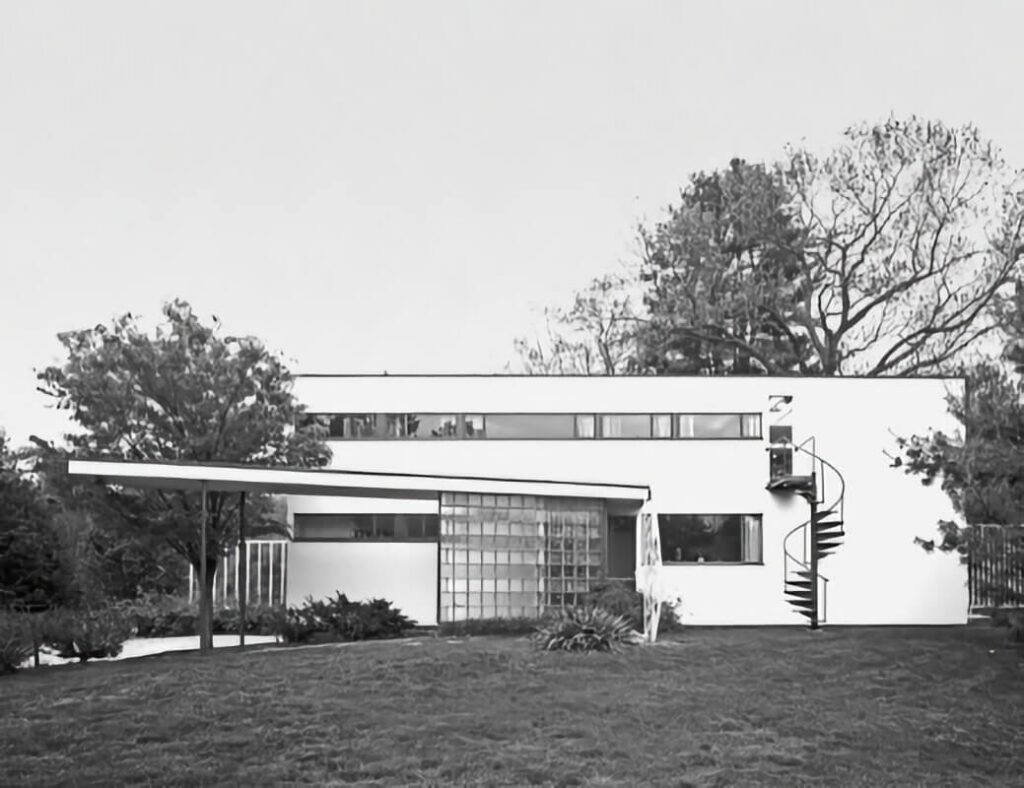
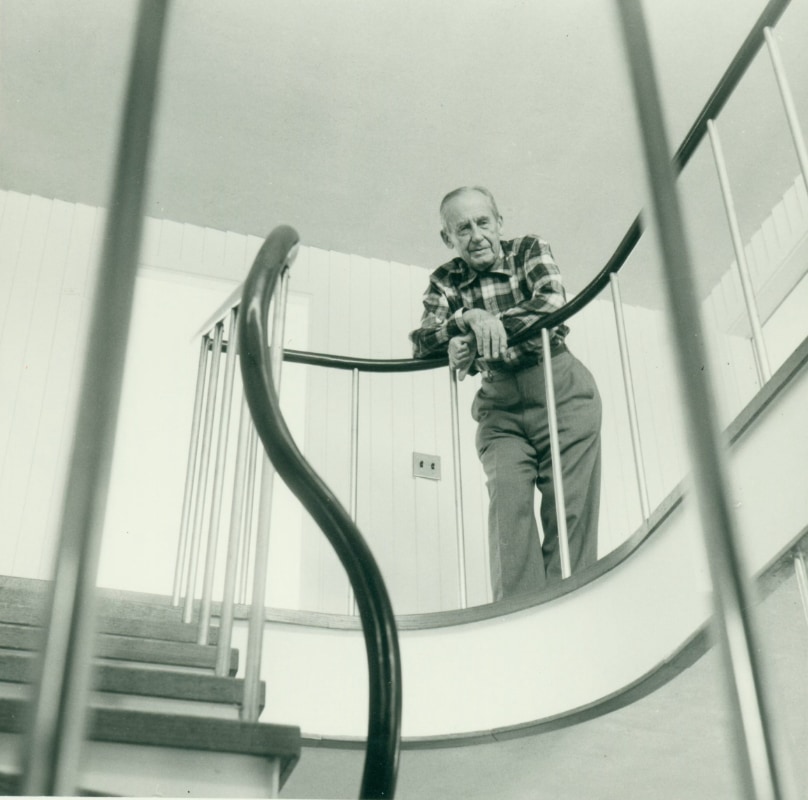
Walter Gropius, founder of the Bauhaus and one of the most influential architects of the 20th century, designed the home in 1938 as his family residence while teaching at the Harvard Graduate School of Design. Conceived as both a living space and a teaching tool, Gropius House exemplifies Bauhaus principles of functional design while responding to the surrounding New England landscape. In 1979, Gropius’s wife Ise donated the property – complete with its original furnishings, artwork, and personal belongings – to Historic New England. The house opened to the public in 1984 and was designated a National Historic Landmark in 2000. Today, it is among the most visited sites under Historic New England’s stewardship.
Despite its historic significance, the site has long lacked a permanent public restroom for the thousands of visitors it receives each year. The competition was launched to address this practical challenge while encouraging creative, contextually sensitive design solutions that integrate seamlessly with the architecture and landscape. In keeping with the Bauhaus spirit, participants were encouraged to experiment with new materials, technologies, and interdisciplinary approaches. Submissions were accepted from both practicing design professionals and architecture and design students.
The submissions were reviewed by a distinguished jury, including Antoine Picon (Harvard Graduate School of Design), Nader Tehrani (NADAAA), Philip Kennicott (the Washington Post), Suzanne Stephens (Architectural Record) and Tanja Hwang (Museum of Modern Art).
“There is something so personal, human, and elemental about a bathroom,” said Tehrani. “I think that offered the participants who didn’t have access to the site a way to conceptualize the project from within – as a private ritual, as it were. This was also a way for them to create a distinction between the public posture of the pavilion within a historic context versus the intimacy of the bathroom interior, a challenge that all the shortlisted entries addressed with poise.”
“In evaluating the submissions, the jurors took into account a range of criteria, from a contextual analysis of the pastoral setting to the relationship of the new restroom to the Gropius House, and the connection between the restroom and the existing visitor center,” said Stephens. “Isabel Strauss’s scheme appealed because of its scale in relation to the Gropius House, its reliance on natural materials, such as local fieldstone, and its simplicity in circulation.”
Historic New England is committed to building a permanent public restroom at Gropius House in the coming years, with timing dependent on funding. The organization also plans to present the finalists’ designs in a public exhibition. As part of the urban renewal strategy for Haverhill, Massachusetts, Historic New England will open a sweeping exhibition space this summer within a 300,000-square-foot historic factory complex it owns in that city; the materials from the competition will be available for public view, with potential additional presentations in locations including New York City and at Gropius House. The five finalist proposals will ultimately become part of the organization’s permanent archives, and Historic New England is also exploring opportunities for publication.
In the Media