
FOR IMMEDIATE RELEASE
November 13, 2025
A Bauhaus Bathroom
Historic New England Launches International Design Competition For A Permanent Public Restroom At Historic Gropius House
Coinciding with the 100th anniversary of the Bauhaus Dessau, the competition invites designers and students worldwide to reimagine the arrival experience at the iconic site.
Courtesy of Historic New England
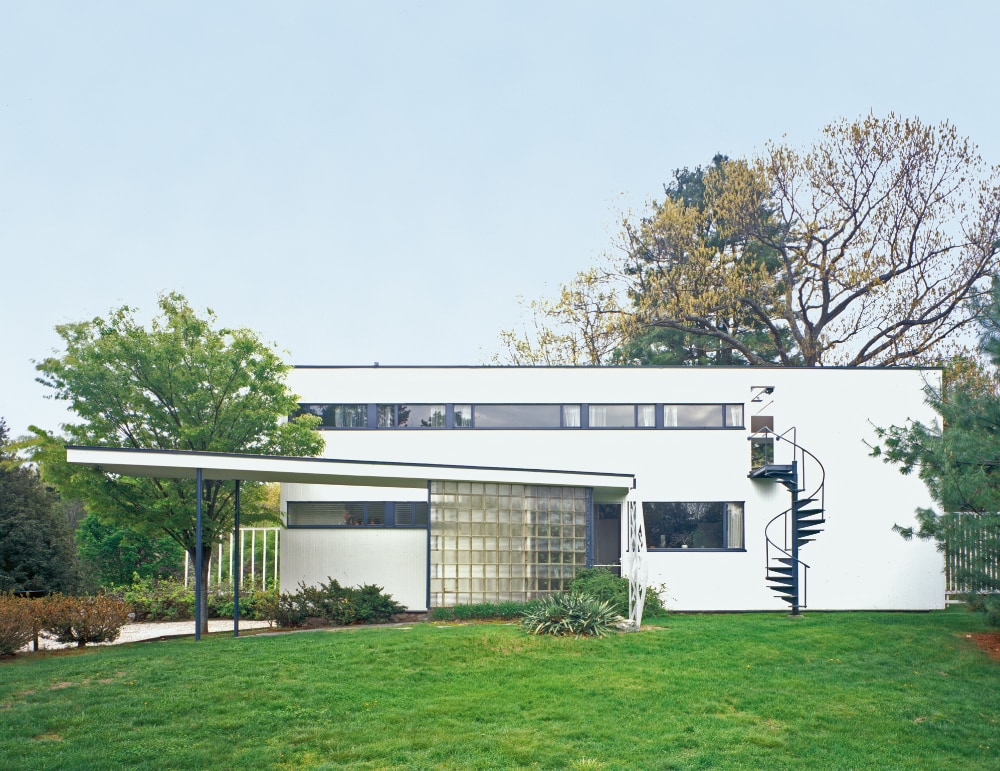
New Haven, CT – Today, Historic New England – the nation’s oldest and largest independent preservation organization – announced an international design competition to reimagine the arrival experience at Gropius House, the Lincoln, Massachusetts home of modernist pioneer Walter Gropius. Coinciding with the 100th anniversary of the founding of the Bauhaus Dessau, the competition invites innovative proposals for a permanent public restroom and redesigned visitor center that honor Gropius’s enduring legacy and addresses this long-standing problem. The announcement was made at Historic New England’s annual Summit, New England’s largest conference about our collective role in creating livable and resilient communities.
“We could not imagine a more fitting way to steward Gropius House – and everything it represents – than by inviting designers around the world to share their most forward-thinking ideas for the site’s evolution,” said Vin Cipolla, President and CEO of Historic New England. “This is the first competition of its kind in our organization’s 115-year history – a reflection of the site’s significance and of our commitment to advancing its relevance and spirit of innovation.”
“The history of the Bauhaus is, above all, a history of ideas,” said Allen Kolkowitz, former designer in the offices of Marcel Breuer & Associates and Trustee of Historic New England, who conceived of and is underwriting the competition. “We are launching this initiative as an exceptional opportunity to conduct a global survey of the Bauhaus’s enduring influence – how its philosophy continues to shape contemporary design practice.”
Walter Gropius, founder of the Bauhaus and one of the most influential architects of the 20th century, designed the house as his family residence while teaching at the Harvard Graduate School of Design. Completed in 1938, Gropius intended the house to serve as both a private residence and a teaching tool, illustrating Bauhaus principles of functional design and the integration of architecture with the surrounding landscape. In 1979, Gropius’s wife Ise donated the home – complete with original furnishings, artwork, and personal belongings – to Historic New England. Gropius House opened to the public in 1984, and was designated a National Historic Landmark in 2000. In the years since, it has become one of the most visited sites under Historic New England’s stewardship.
Courtesy of Historic New England
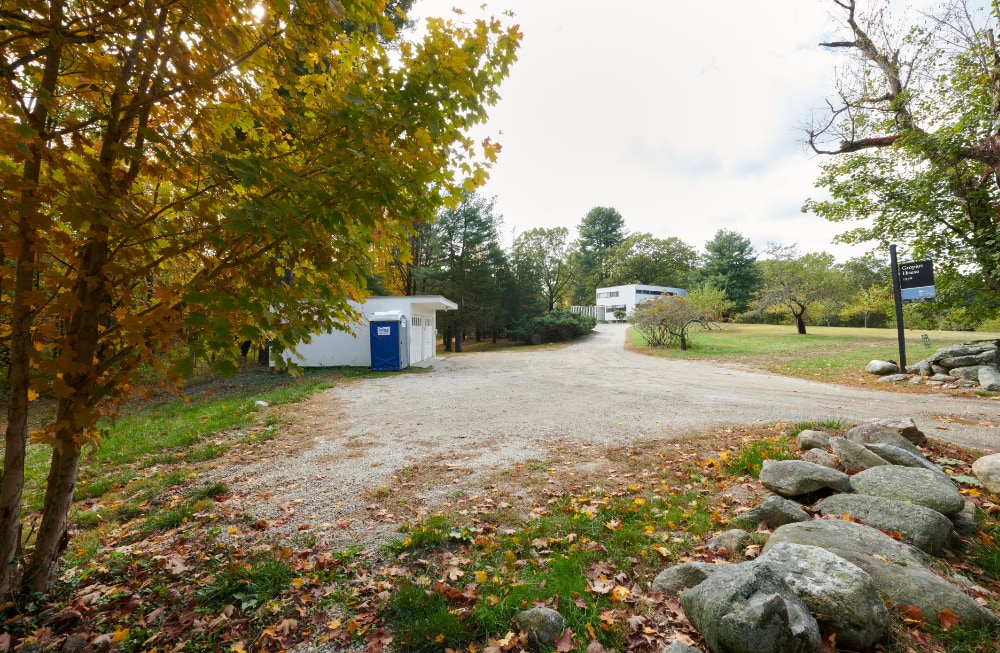
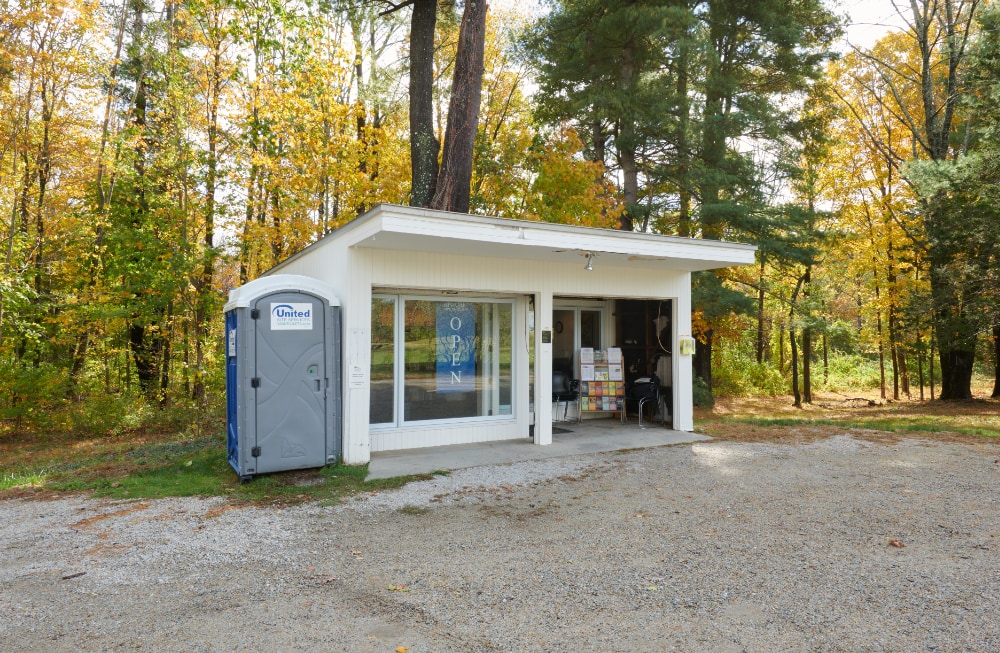
But this legendary site has no permanent restroom for the thousands of people that visit each year – rather, it has a portable toilet adjacent to the house’s original garage, which is now used as a visitor center. The competition addresses the critical need for a permanent, accessible, and thoughtfully designed public restroom at Gropius House. Participants are invited to propose creative, contextually sensitive solutions that integrate seamlessly with the site and architecture, while enhancing visitors’ sense of arrival and connection to the landscape. To foster a wide range of approaches and perspectives, the initiative comprises two parallel competitions: one for practicing design professionals and another for architecture and design students.
In keeping with Gropius’s design philosophy, entrants are encouraged to experiment with new materials, technologies, and ideas that challenge conventional design thinking. The competition welcomes contributions from all design disciplines and encourages interdisciplinary teams that may include architects, landscape architects, graphic designers, industrial designers, and other aligned professionals.
Submissions will be reviewed by a distinguished jury, including:
- Antoine Picon, G. Ware Travelstead Professor of the History of Architecture and Technology at Harvard Graduate School of Design;
- Nader Tehrani, Founding Principal of NADAAA, former Head of the Department of Architecture at MIT (2010-14), and former Dean of the Irwin S. Chanin School of Architecture of the Cooper Union (2015-22);
- Philip Kennicott, Pulitzer Prize-winning Senior Art and Architecture Critic of The Washington Post;
- Suzanne Stephens, former Deputy Editor of Architectural Record; and
- Tanja Hwang, Curator in the Department of Architecture and Design at the Museum of Modern Art.
Winners will receive a cash prize, as well as inclusion in the Gropius House archives and an exhibition at the property. Historic New England aspires to ultimately realize the winning design, or a variation thereof, onsite.
Competition timeline:
- January 5, 2026: optional site walk
- January 9, 2026: requests for information due
- February 6, 2026: submission deadline
- February 27, 2026: finalists announced
- Mid-March 2026: virtual finalist presentations
- March 27, 2026: winner announced
- Summer 2026: winner exhibition
For submission requirements and additional details, please visit https://gropiuscompetition.info/.
About Historic New England
Historic New England – founded as the Society for the Preservation of New England Antiquities in 1910 – is the oldest, largest, and most comprehensive independent preservation organization in the United States. Historic New England welcomes the public to 38 exceptional museums and landscapes, including several coastal farms. The organization operates a major collections and archives center in Haverhill, Massachusetts, and has the world’s largest collection of New England artifacts, comprising more than 125,000 decorative arts and objects and 1.5 million archival documents including photographs, architectural drawings, manuscripts, and ephemera. Engaging education programs for youth, adults, and preservation professionals, and award-winning exhibitions and publications are offered in person and virtually. The Historic New England Preservation Easement program is a national leader and protects more than 129 privately owned historic properties throughout the region.
# # #
Press contact
Elizabeth H. Kubany
KUBANY, LLC
elizabeth@kubany.co
Laura Sullivan
Historic New England
lsullivan@historicnewengland.org